Horizontal vs Vertical SaaS Automation: Mapping Efficiencies in Niche Verticals and Horizontal Platforms
The Landscape of SaaS Automation
Think of SaaS as a city.
Every street represents a function, every building a solution.
Some companies build tall skyscrapers that serve everyone: these are the horizontal SaaS platforms.
Others design compact, specialized studios for specific professions : those are the vertical SaaS solutions.
Both models power modern business automation, but they do it differently. Understanding how they create efficiency helps teams to choose the right foundation for their workflows.
A Quick Map of Horizontal and Vertical SaaS
Horizontal SaaS automation platforms - They are the generalists.
They offer tools that any industry can use: think of solutions like Slack, Notion, or Zapier.
Their strength lies in: flexibility, integration and scalability.
Vertical SaaS platforms, on the other hand, go deep instead of wide.
They focus on one niche: legal, healthcare or logistics. They design automation workflows that solve that industry’s specific pain points.
Imagine a healthcare CRM that automatically pulls lab results, schedules follow ups and tracks compliance.
That is efficiency through precision.
Growth and Evolution of Both Models
Horizontal SaaS has dominated for years because it appeals to everyone. But the market is maturing.
Industries now want software that understands their language. That is where vertical SaaS platforms are rising fast.
Recent studies show that vertical SaaS adoption is growing nearly twice as fast as horizontal platforms, especially in regulated sectors like finance and healthcare. Yet the need for cross platform compatibility keeps horizontal players strong.
The future does not belong to one or the other. It belongs to collaboration between both.
Comparing Real World Use Cases
Let us take three industries - legal, healthcare, and logistics.
A law firm might need document automation and case tracking.
A hospital might look for patient data synchronization and compliance reporting.
A logistics firm needs route optimization and delivery tracking.
Each of these uses vertical SaaS automation tools tailored to its context. But when these companies need to connect those workflows with marketing, billing, or analytics systems, they turn to horizontal platforms.
That is where no code integration tools bridge the gap: linking deep specialization with wide connectivity.
Deciding Between Horizontal and Vertical Platforms
So when should a business go vertical and when should it stay horizontal? It depends on priorities.
If you need speed, scalability and flexibility, horizontal SaaS automation platforms can be chosen. They allow teams to plug multiple tools together and move fast.
If you need precision, compliance, or industry depth, vertical SaaS solutions win.
They come with built in intelligence that understands your domain from the start.
Most mature organizations blend both: a vertical base for specialization and a horizontal layer for scalability.
Building Integration Strategies That Work
Modern automation is not about choosing one path.
It is about orchestration.
Businesses can now design unified workflows.
Let vertical SaaS systems manage niche tasks while horizontal platforms handle the connective tissue.
This mix creates adaptive automation: flexible yet focused.
And that is exactly where no code integration becomes powerful.
It lets teams build seamless links between their specialized systems and general platforms without writing code or hiring engineers.
Konnectify’s Perspective on the Future of SaaS Automation
In this hybrid world, flexibility wins.
Konnectify was built on that belief.
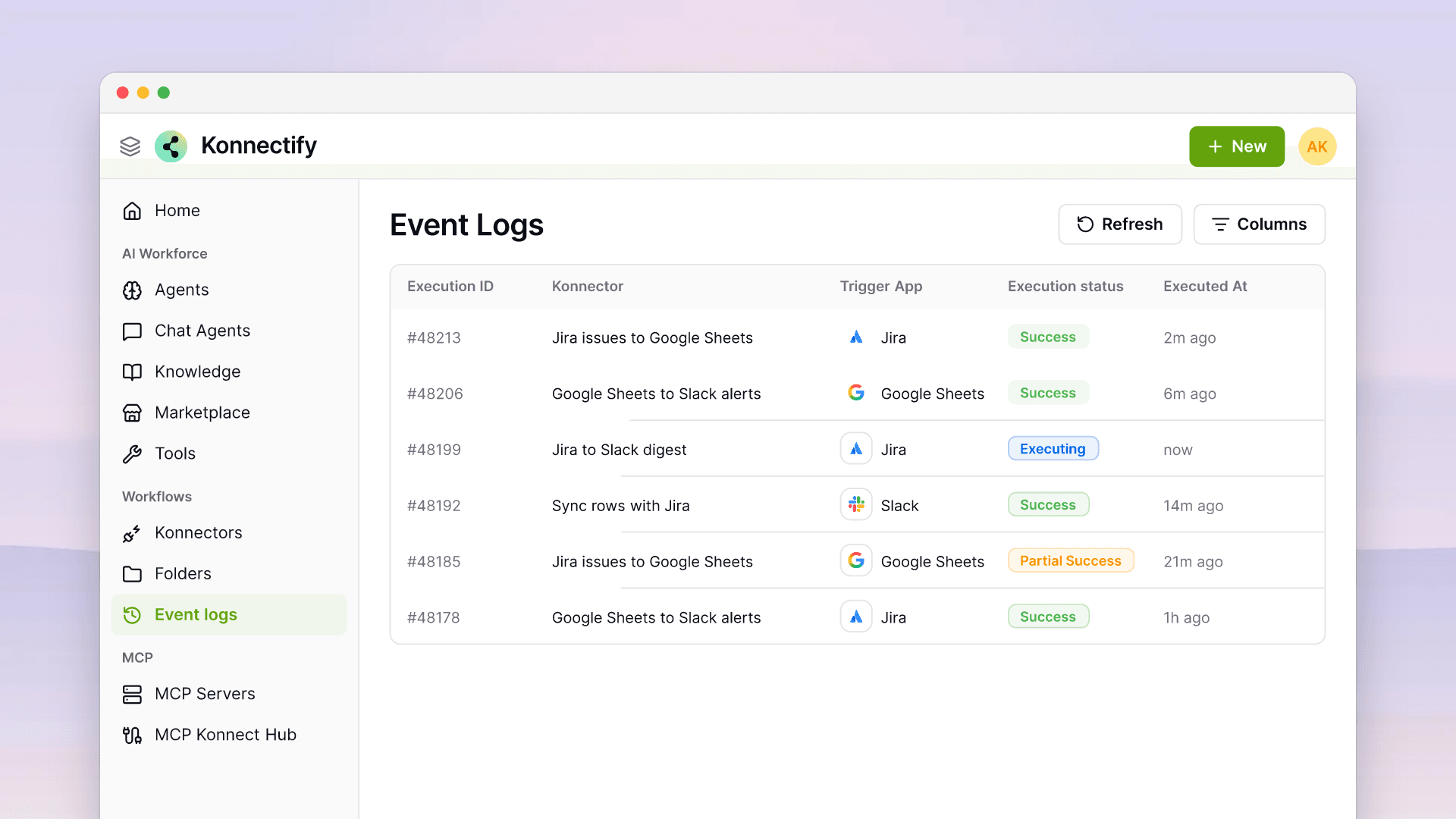
Its no code integration engine connects vertical tools with horizontal ecosystems effortlessly, giving businesses a unified automation layer that thinks across boundaries.
Whether you run a legal SaaS or a logistics CRM, Konnectify makes your systems talk to each other and learn from shared data.
The next generation of SaaS automation will not be horizontal or vertical.
It will be both: connected, adaptive, and intelligent.